Which Way Does a Hydraulic U-Cup Seal Face? Pressure-Side Orientation Explained
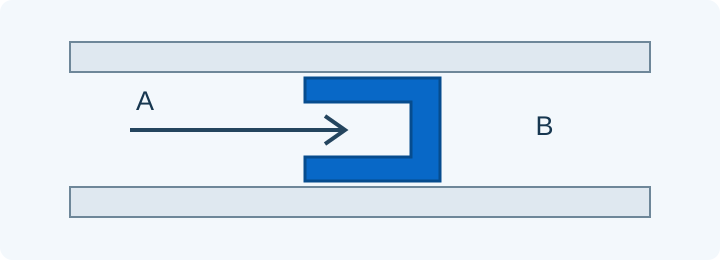
A U-cup is pressure-energized: system pressure acts on the open side of the profile and increases lip contact. But not every cup-shaped seal is interchangeable, and some symmetrical or double-acting designs need a different arrangement.
The arrangement must be approved for the exact profile. Hallite warns that using two single-acting piston seals can trap pressure; do not improvise an opposed pair from appearance alone.
Use the pressure chamber as the reference
On this page
- Use the pressure chamber as the reference
- Why the open side faces pressure
- Rod seal vs piston seal orientation
- Why people still install them backward
- Before installing
- Three orientation questions that prevent guessing
- Illustrative example: two seals that look symmetrical
- Before approving the orientation
- Was this guide helpful?
Why the open side faces pressure
Hydraulic lip seals use pressure to reinforce the initial contact created by the seal geometry. As pressure enters the open side of a single-acting U-cup, it pushes the sealing lips toward the rod and gland or toward the piston and bore. That pressure activation is part of the design.
Rod seal vs piston seal orientation
For a rod seal, pressure is typically on the cylinder side of the gland, so the open side faces inward toward the pressure chamber. For a single-acting piston seal, the open side faces the chamber that will be pressurized. The important reference is pressure direction, not “left” or “right.”
Why people still install them backward
- The old seal may be distorted and no longer shows its original shape.
- Symmetrical loaded U-cups can look identical from both directions.
- A cylinder may contain a buffer seal plus a secondary rod seal, making the stack look unfamiliar.
- Double-acting piston arrangements can use two opposed seals or a purpose-built double-acting profile.
See the full rod seal / U-cup installation tutorial →
Before installing
- Identify whether the seal is rod, piston, buffer, wiper or static.
- Determine which side of the groove sees pressure in service.
- Check whether the seal is single-acting, double-acting or symmetrical.
- Protect the lip from threads, ports, keyways and sharp edges during assembly.
See also rod seal vs piston seal and installation damage.
To connect this inspection with the next repair decision, see Hydraulic Seal Sourcing: OEM Kit, Stock Seal or Custom Machined Seal?.
Three orientation questions that prevent guessing
| Observed situation | Next verification |
|---|---|
| What does this groove seal? | Distinguish the rod, piston, buffer and wiper positions using the cylinder drawing. |
| Which chamber loads it? | Mark the pressurized side for each operating mode; left/right in a photograph is not a pressure reference. |
| Is this arrangement approved? | Confirm profile and stack instructions before treating two single-acting rings as a double-acting assembly. |
Illustrative example: two seals that look symmetrical
A replacement looks similar from either end, and the removed part has lost its markings. Visual symmetry does not establish bidirectional duty. For example, Hallite describes its 513 as suitable for single-acting rod or piston service, but advises against a back-to-back double-acting arrangement. Identify the actual part before applying that example to another product. A useful handoff is a marked pressure-side photograph plus the part number and groove location; an unlabelled “which side up?” photograph leaves the key question unanswered.
Before approving the orientation
- Mark pressure side and seal position on the drawing or a clean assembly photograph.
- Confirm the drawing describes the exact replacement profile and material variant.
- Check lip condition, seating, energizer position and specified adjacent support parts.
- If the pressure map and product drawing disagree, resolve the discrepancy with the supplier before assembly.
Technical references
Use the exact seal manufacturer and machine service data for final selection.
Need to narrow the fault?
Use the interactive tools after the inspection—not instead of it.
Was this guide helpful?
No name or account needed. Your choice stays in this browser unless you allow analytics; then it is sent through Google Analytics without personal-information fields.